47 GHz 1st QSO
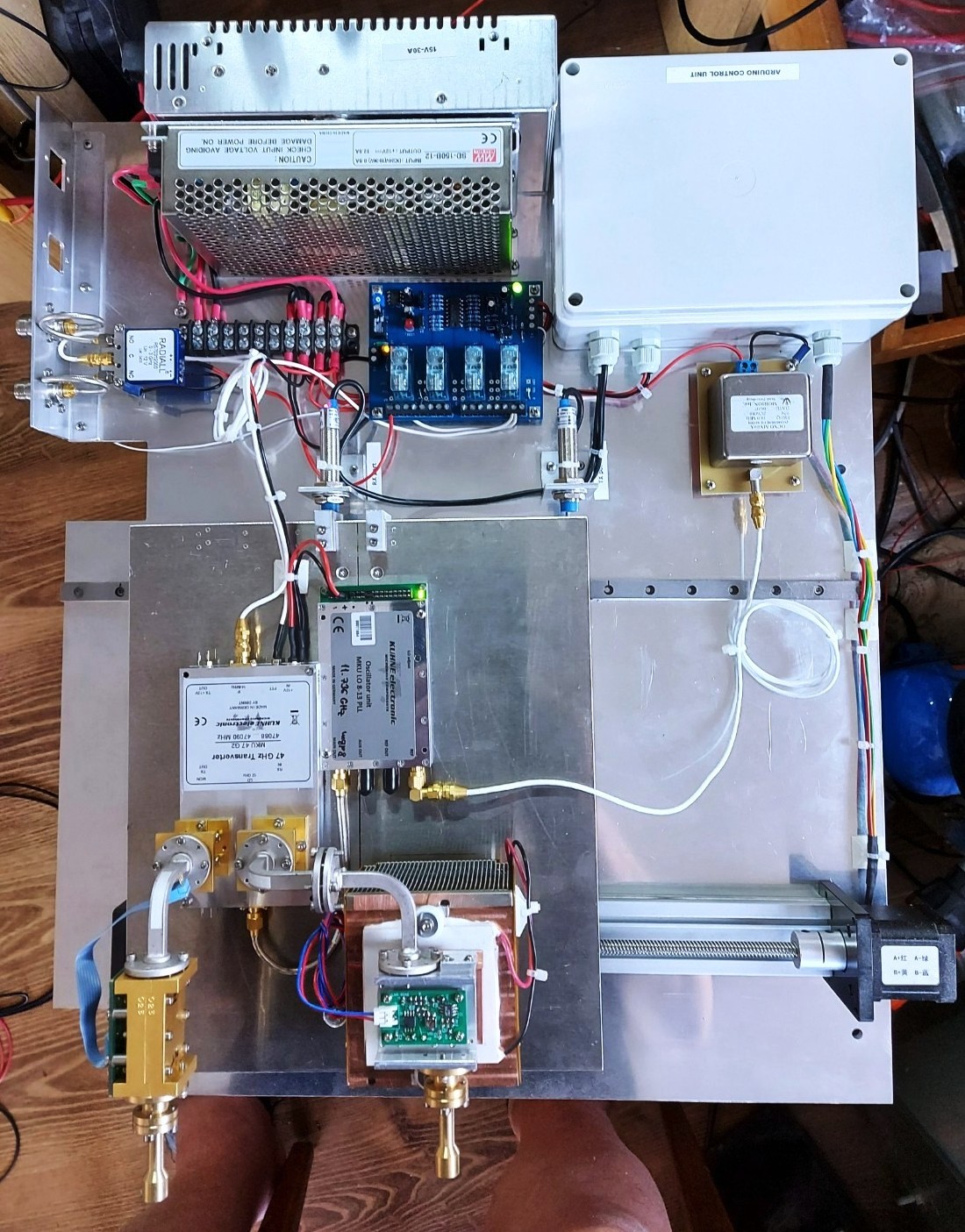
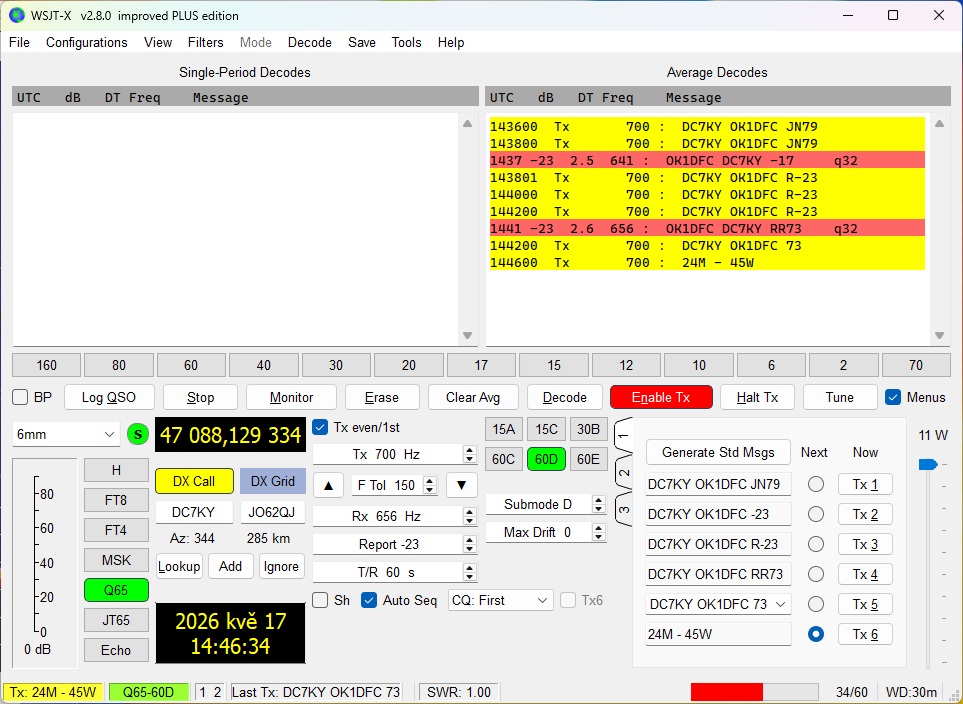
TRV v4.0 - IC9700 GPS locked - DB6NT - 2,4m solid dish - VLNA - 3,6dB N/F JA8CMY - 25dB gain, WR22 waveguide switch
47 GHz EME QSO by
OK1DFC and DC7KY
After
five years of preparation and research, I finally managed to establish a real
EME QSO in the 47 GHz band. This was preceded by the construction and
modification of four versions of transverters, the replacement of the dish, and
many other tasks. Finally, on the already functioning system, I replaced the
dish drive control developed very well by Jose EA3HMJ unit with one offering a
resolution of 0.001 degrees. Yes, this is truly essential. The radiation pattern
of my antenna is 0.16°. In addition to the technology, favorable weather
conditions and low lunar libration are also very important. I made my first
attempts back in October of last year with Miguel CT1BYM, but they didn’t work
out—rain, clouds, and high water vapor content in the atmosphere prevented it.
The most painful was the first attempt at 47 GHz. I didn’t realize that I
needed to set a longer PTT hold time than it takes for the waveguide switch to
switch, and I ended up damaging a very nice LNA from Iban EB3FRN that had given
me a solar noise figure of 12 dB. After repairing it, I got the figure down to
just 7 dB, which is clearly insufficient for the signals present at 47 GHz EME.
(N/F is 4.2 dB, measured at OK2AQ lab, thanks to his help and consultations)
Currently, I’m using a replacement LNA—also not so good as previous made by
JA8CMY, but my solar noise is now 9.4 dB. Macom will sent me a new chip, so I
have one more LNA repair coming up in May, and I hope it will work properly this
time. I made my first attempt on April 20 and 21. Everyone heard me perfectly,
but I couldn’t hear anyone. This is described, including screenshots, in a
post from DUBUS contest. So, I replaced the LNA with a JA8CMY and chose an even
better time for the contact on April 23. Klaus DC7KY was ready. He uses a 2.4m
prime focus antenna and 15W of power. After the contact began, he decoded me
immediately. I didn’t decode him until AVG because, after all, 3 dB of solar
noise is still missing. The contact became a reality. I received a report of -16
and transmitted R-32, because the AVG decoding didn’t evaluate it any better.
Klaus used “SH - short message” mode in WSJT for the confirmation, which I
didn’t like very much, but okay—I saw both RRR and 73 on the corresponding
frequencies in waterfall. We have another sked scheduled for May; hopefully he
won’t do something like that again and the contact will go as planned. By May,
my LNA should be repaired, and conditions will be even slightly better than in
April. Hopefully the amateur radio gods will have mercy and grant us good
weather as well. A screenshot of the contact and a few pictures follow.
In closing, I would
like to express my sincere thanks to Mirek OK2AQ for giving me the
opportunity to measure the noise figures on the LNA for 47 and 76 GHz, as well
as for his expert advice and assistance. I’d also like to thank the guys from OK1KIR,
who have been my inspiration for EME operations since 1978, and last but not
least, Franta OK1CA, with whom I actually began my entire EME endeavor in
1996 and Manfred DL7YC for other hints and tips.
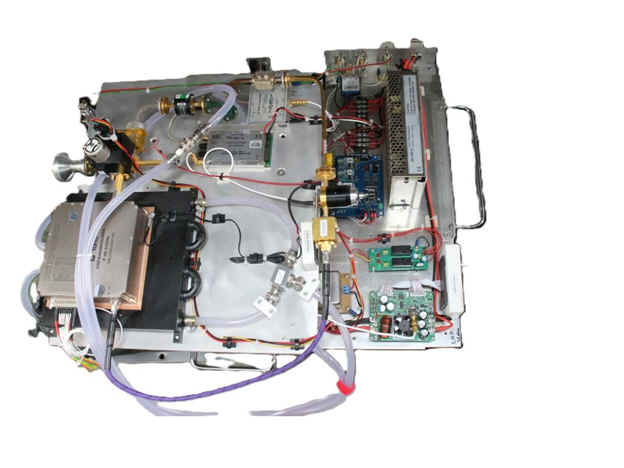
Various views of the
TRV.
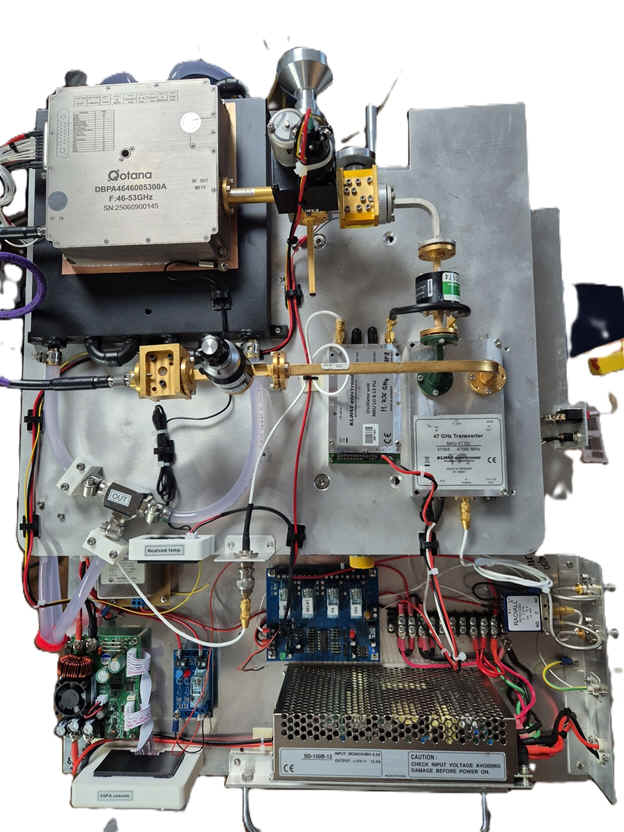
Equipment used
during the contact with DC7KY.
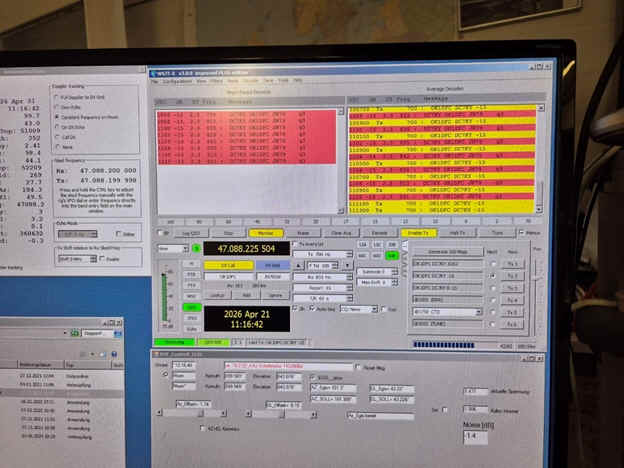
Screenshot from the
attempt with DC7KY on April 21.
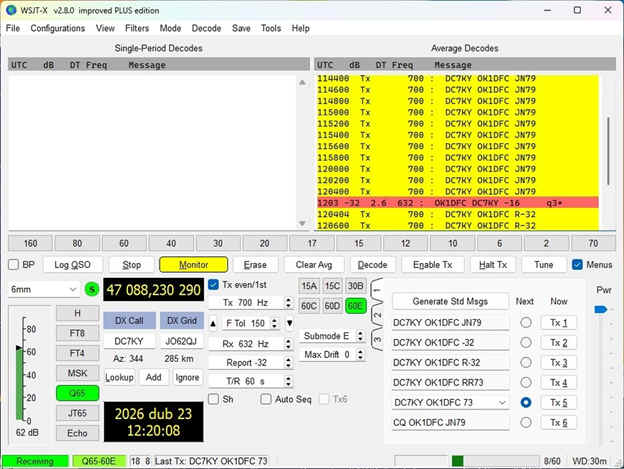
Decoded DC7KY
signal in AVG
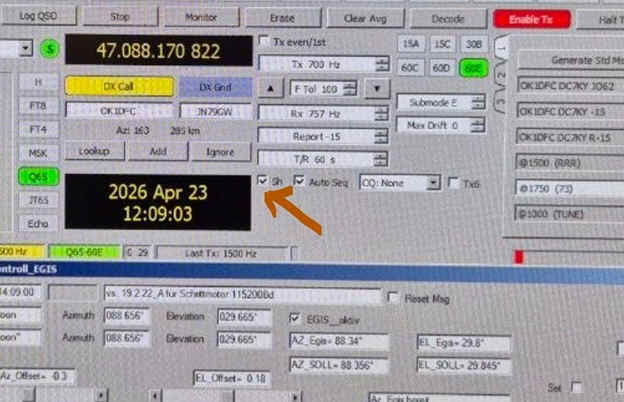
A screenshot from
Klaus's screen showing the "Sh" checkbox selected. This causes a
single tone of 1500 Hz to be transmitted as "RRR" and 1750 Hz as
"73," which is what happened in this particular contact. Hopefully
next time it will include the full text.
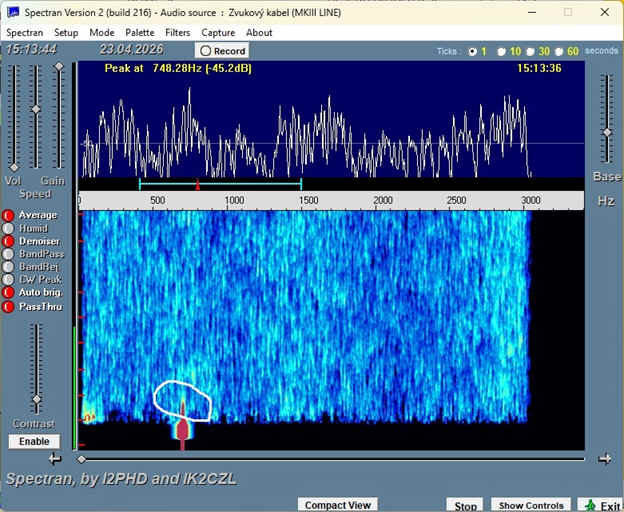
My own echo at 47
GHz; only a small portion is visible, but it’s quite strong. The shortest
reason because the switch time to RX is set long for better LNA protection.